After Black Friday, creative strategists still paid per ad are in TROUBLE.
Meta’s system, explained on 28 October, drops ads before anyone sees them.
Brands are about to test more ads than at any other time of year. Black Friday is 27 November.
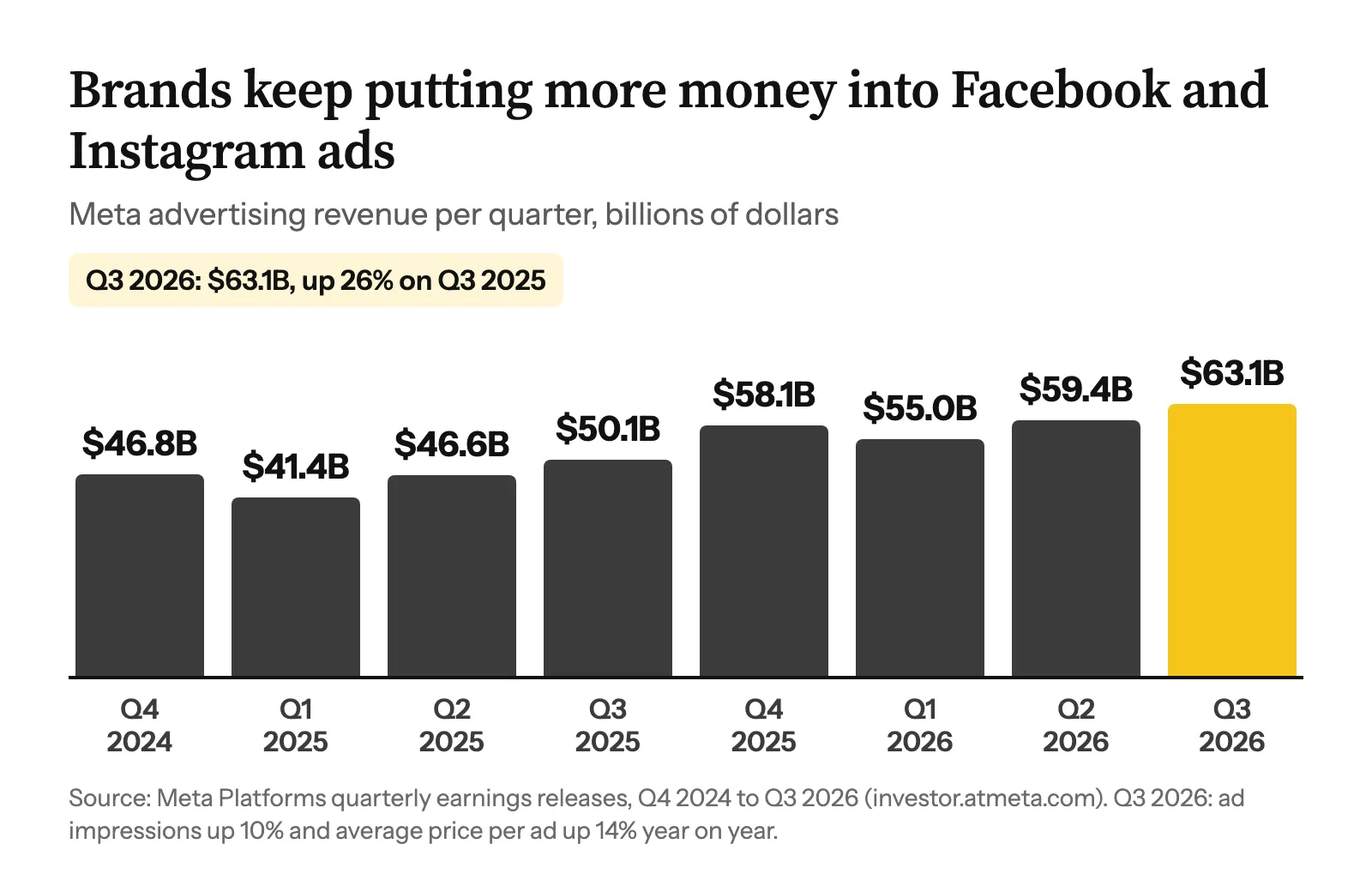
BUT: Meta’s average price per ad is up 14% on last year, and its first cut drops an ad before a single person sees it. A batch that never gets shown is worth nothing to the client.
If you’re paid per ad, that’s the question waiting on your January invoice.
The good news: it’s a pricing fix, and it starts with one screenshot. Strategists paid on the ads that survive are in a stronger seat than ever.
Below I’ll break down the 2 moves.

If part of a batch never gets shown, what was the batch worth?
One strategist I coach already lives inside that question. He told my team: “Brands doing $10M a month are DMing me and my LinkedIn is empty.”
The demand had found him. He had nothing to show it, and Meta has just made that a lot more expensive.
What Meta’s engineers actually published
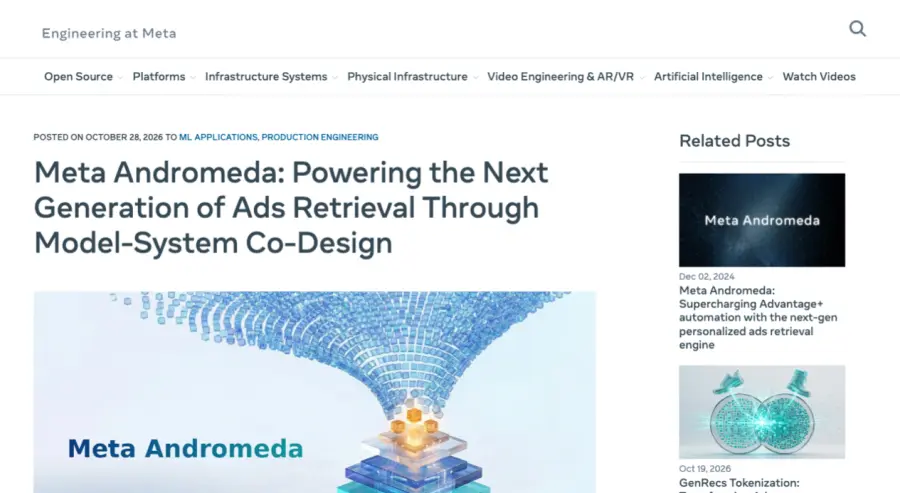
On 28 October, Meta’s engineers explained the newest version of Andromeda, the system that decides which ads even get a chance to be shown. Before an ad gets ranked, priced or shown to a single person, it has to survive that first cut.
An ad that gets dropped there is finished for that moment. The later stages, the ones that decide who sees what and for how much, never get to look at it. And the pile it has to climb out of keeps growing, because AI tools have pushed the number of new ads into the hundreds of millions.
Every impression costs more, too
A week earlier, Meta reported its third quarter.
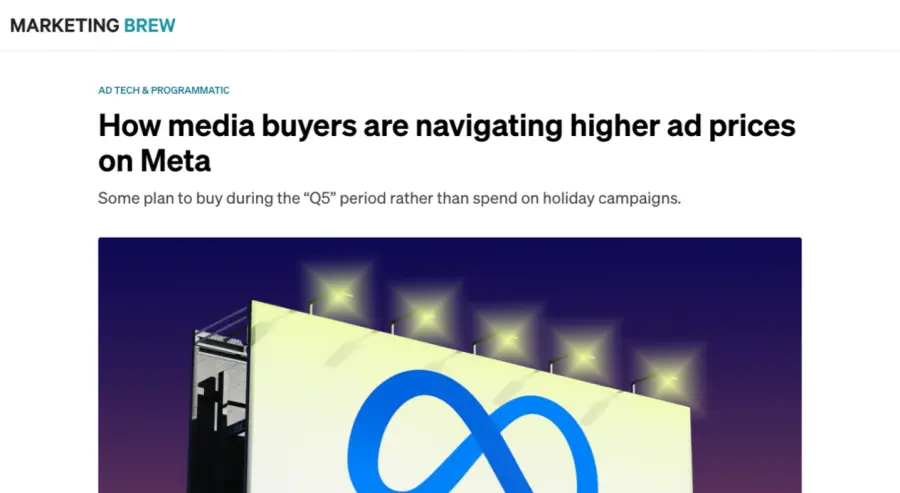
Ad revenue came in at $63.1 billion, up 26%. Marketing Brew had already reported on 8 October that price per ad rose 12% in each of the first 2 quarters, with one line every strategist should frame: “creative is the new targeting.”
So a brand now pays more for every impression, in a bigger crowd, with a first cut that never tells it which ads died.
Per-ad pricing pays you for the part AI just made cheap. These 2 moves get you paid for the part it can’t do.
- Move #1: Get your ads onto real spend, and keep the screenshot of every one that survives.
- Move #2: Reprice around the survivors: a retainer with a share of the ad spend on top, quoted with the screenshot open on the call.
Do these 2 and the founder conversation changes:
- you quote on what survived, instead of how many you shipped
- the founder sees real spend before they see your rate
- your deal grows when the ads work, which makes it the hardest line to cut in January
Both moves come straight out of my programs, and more than 1,000 people have been through them.
First: why listen to me?
My name is Sean Ferres.
I’ve spent almost 9 years in direct response, and 7 of them teaching copywriters and marketers how to land clients. My head coach, Sam, is the best creative strategist I know. (I collect good people. Toot toot.)
I also run the ads of the people I coach in my own ad account, with my own money. Most of those ads go nowhere, and I pay to find that out.
This year, I brought 30 of the people I coach on in a single week to make ads for me. So I sit in the founder’s chair every week, reading proposals from creative strategists, and I know what I check before I sign one. The PDF isn’t it.
(What I check is whether their ads have survived real spend. Here’s how we get that for the people we work with.)
Move #1: Get your ads onto real spend, and keep the screenshots
Every founder asks the same question, and the only answer that works is a screenshot.
Sooner or later, it comes.
“Soooo... what have your ads actually done?”
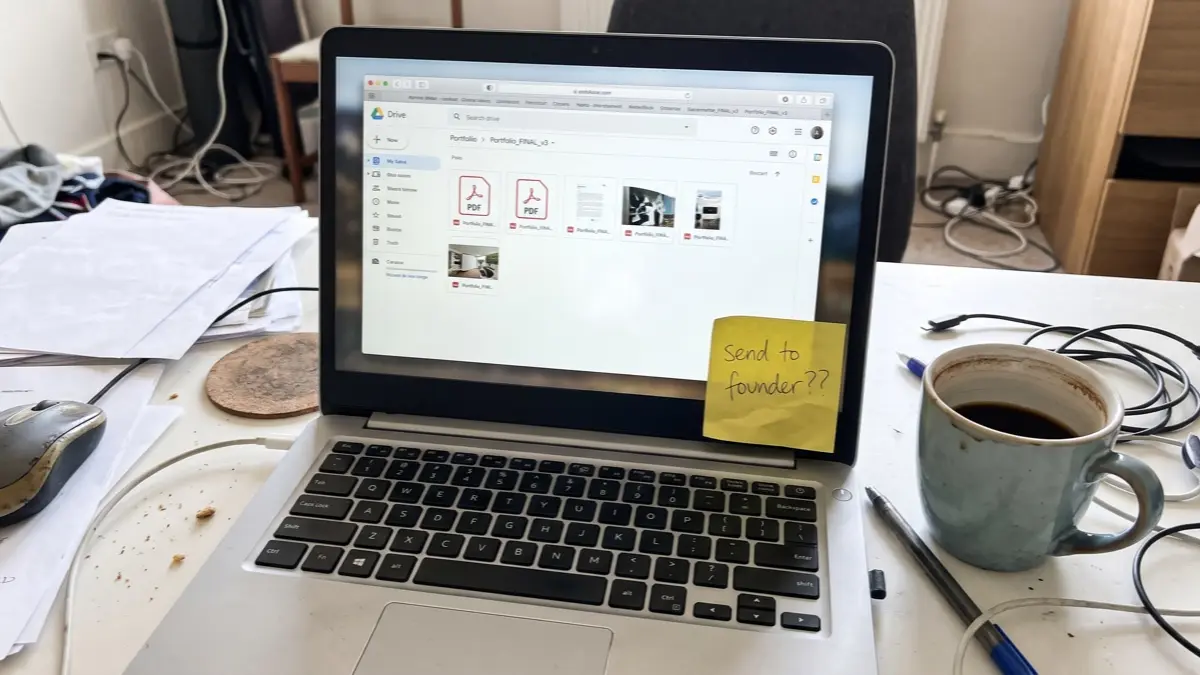
The problem: the best work is locked in someone else’s account
It trips up experienced strategists for a really dumb reason:
- the agency owns the login
- the brand never sent the numbers back
- the NDA ate the best work
That’s how a strategist ends up with $10M brands in his DMs and an empty LinkedIn.
Why volume stopped being the product
Making ads used to be the hard part.
Dave from marketing can’t knock out 40 extra ads on his lunch break. My Claude Code cooks a batch of 50 statics while I make a coffee.
So the typing got cheap, and everyone’s typing. That’s where the hundreds of millions of new ads came from.
Another member told my team: “Brands already know Andromeda is shafting them.” Founders don’t need the engineering post explained. They’ve watched it in their own numbers.
What never got cheap is deciding what those 50 ads should say, and knowing which ones made it through.
What a survivor looks like
A survivor needs a real test first. The people I coach make 3 ads for one of my live funnels, and I run them on my own budget.
Quick note before the screenshots on this page: they’re individual stories from people who did the work. Results vary and depend on effort, and they aren’t typical outcomes.
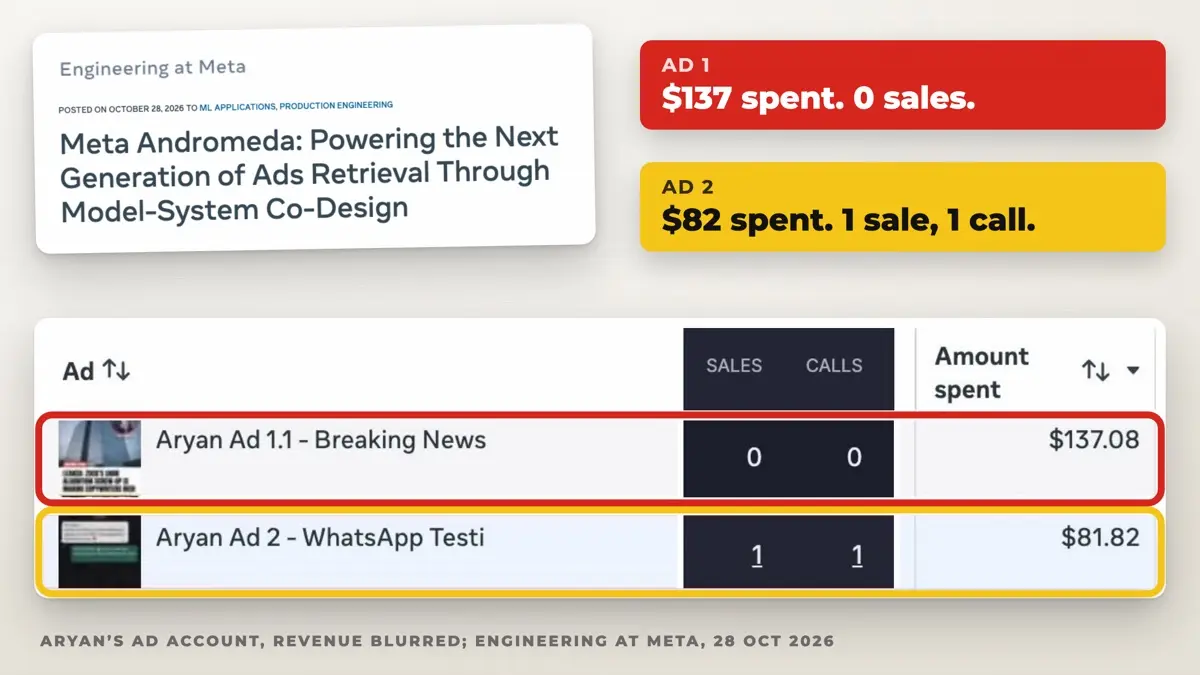
In that 57-ad test, one of the few that sold was Aryan’s.

I messaged him that at a 42x return on ad spend, it might be the single highest ROI ad I’d ever run. The next morning, he told the group what happened when he forwarded that message to a founder.
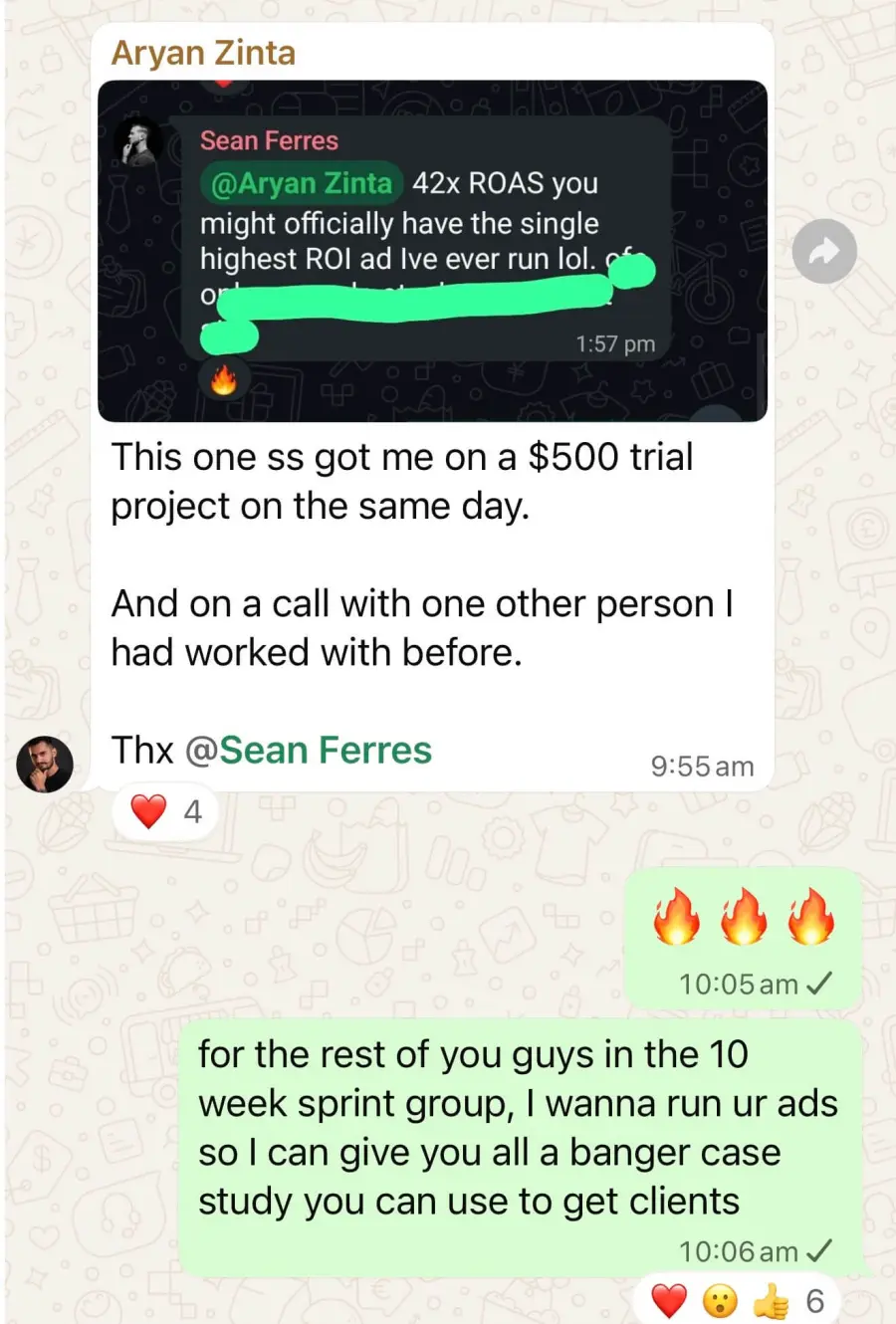
That’s proof a founder can’t argue with: an ad that spent real money, in a crowded account, and won. Here’s how we run that test with you.
Gaurav shows what it does inside a client account. He landed an ecom brand as its creative strategist, making 200 video ads a month, and took a brand-new ad account from $3K a month in spend to $20K.
Then he posted this in our group: “All other strategists are fired except me haha.” The brand trimmed its creative team and kept the one person holding the numbers.
Move #2: Reprice around the survivors
Once the screenshot exists, the per-ad invoice is the worst deal on the table.
Per-ad pricing has a trap in it.
Andromeda wants more ads, so a strategist ships triple the volume and invoices like it’s 2023. Their ad carries the brand’s Black Friday, and they got paid for it once.
The people I work with stopped quoting per ad. Once they had a screenshot, they quoted a monthly retainer with a share of the ad spend on top, and they did it with the screenshot open on the call.
Say the number, then stop talking
Leilani sent one application and got a yes.
She messaged me at 4:47 in the morning, and the second bubble is the one every strategist should read twice.
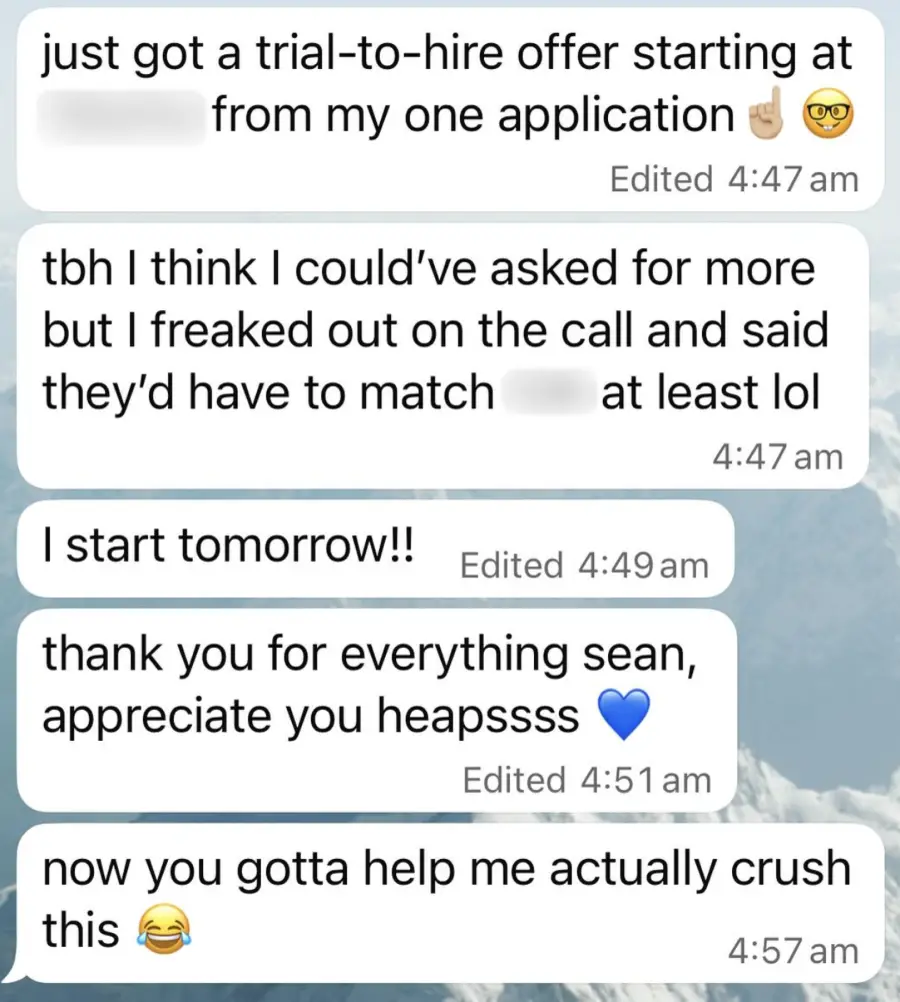
Even with a yes in hand, she reckons she undersold herself. Most people do it the first time, because the number feels huge to them and tiny to a brand spending that much on ads before lunch.
Cyan closed a beauty brand on a monthly retainer plus 1.5% of the ad spend. He typed the news from his desk at his day job.
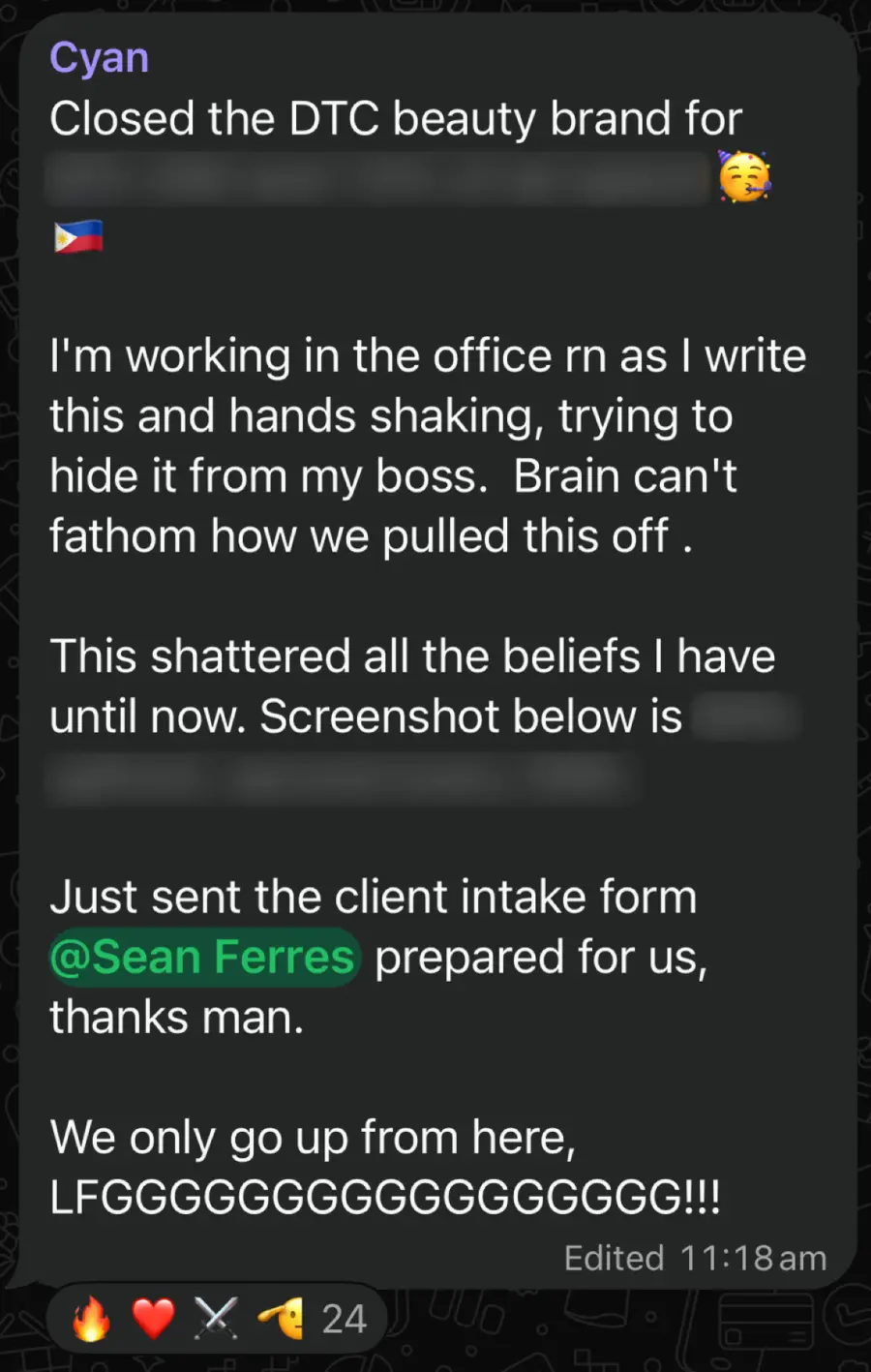
Evelina signed a retainer with a share of the ad performance on top. Every one of those deals took work.
But look at what’s in every one of them: a share of the result.
A founder says yes to that because the deal only costs more when the ads are working. (I break down how that conversation goes in this short video.)
Why Black Friday is the test that counts
Black Friday is Friday 27 November. From what I watch every November, the biggest brands multiply their daily ad budgets for that week. More spend burns through ads faster, so they test more of them, into the most expensive auction of the year.
Then December flips every ad from “treat yourself” to “buy this for your mum”, and January wants a fresh batch again. That’s 3 rounds of testing in 90 days.
A screenshot that says “this ran in Q4 and survived” is the one thing a founder stops arguing with.
Give it 3 to 6 months, and I reckon the biz-opp gurus will pump a flood of 18-year-olds into creative strategy, the same way they did with copywriting. They’ll compete on price per ad, against software that makes ads for next to nothing.
The strategist holding Q4 screenshots and a share of the spend gets to skip that fight.
The easy way to do all of this
Of course I’d love your business. But whether you work with me or not, before the January refresh you must:
- Get your ads onto real Q4 spend, and screenshot every survivor
- Quote a retainer with a share of the ad spend, with the screenshots open
Do those 2 and your invoice follows the ads that survive the first cut.
Do it yourself, or do it with us
You can piece this together yourself. Talk a brand into letting you run a few ads, chase them for the numbers, and guard every screenshot like a winning lotto ticket.
Or take the shortcut. This Black Friday I’m running The Doorbusters, a 12-week case-study group inside The Creative Strategist Breakthrough. I’m doing it once, for Black Friday only, and 10 is the most I can take so everyone gets my eyes on their work.
Phase 1 is called “Get Useful Before Black Friday”, and it runs from now until 27 November. It’s where your research, angles and hooks get built, so your ads are ready while brands test hardest. Join after Black Friday and you’ve missed it. There’s no second round.
You make 3 ads for one of my live funnels, I run them in my own ad account with up to $1,000 of my ad spend behind them, and you keep the screenshots. Ben, my closer and a former hostage negotiator (which explains a lot), gives you the scripts for the retainer conversation.
Follow the steps, and if you haven’t hit the 12-week target (terms on the next page), my whole team keeps working with you for up to 9 more months. If you’ve never written copy, sold anything or worked in marketing, this isn’t your door yet.
→ If you’d like 3 of your ads running on my budget before Black Friday, here’s how we’d set it up
That’s all!
Sean
Get the next one
I write one of these when something in advertising changes and it matters for people who write, sell or market for a living. Get the next one by email.
One email when there is a new article. Unsubscribe any time. Privacy

Sean runs The Creative Strategist Breakthrough. He has spent almost 9 years in direct response and 7 of them helping copywriters land clients. 88 copywriters he has worked with have built six-figure incomes. More about Sean