On 17 November, Salesforce started cutting AGAIN. Your pipeline was never yours.
Five days earlier, Gainsight gave its smaller accounts to an AI agent.
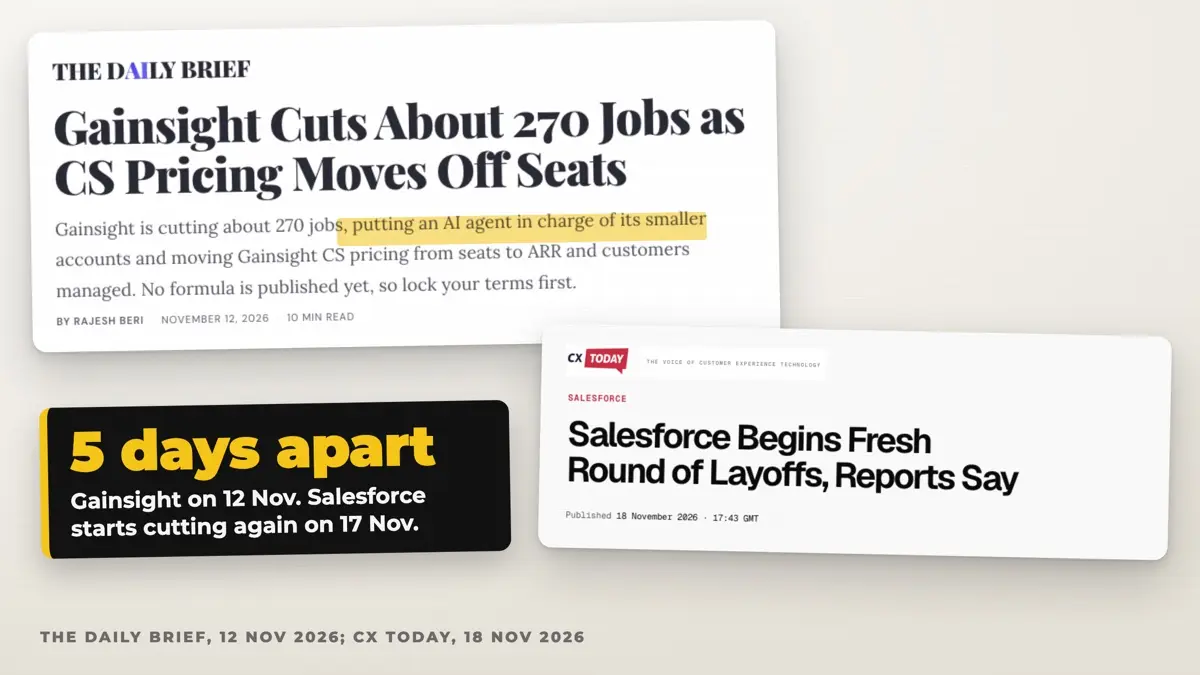
Salesforce sells the software your whole pipeline lives in. This week, per Business Insider, it started cutting roles across teams and levels. It hasn’t said how many.
BUT: it already replaced about 4,000 support roles with AI agents last year. And Gainsight just put an AI agent on its smaller accounts, the ones newer reps learn on.
If your income depends on leads someone else hands you, you don’t get a vote in that meeting.
The good news: the skill brands are short of this Black Friday, 27 November, is the one you already use on calls.
Below I’ll break down the 2 moves good closers are making.

Salesforce won’t say which teams. Black Friday won’t wait to find out.
Business Insider broke it on 17 November, citing internal Slack messages: staff across several teams and levels were losing their roles that week.
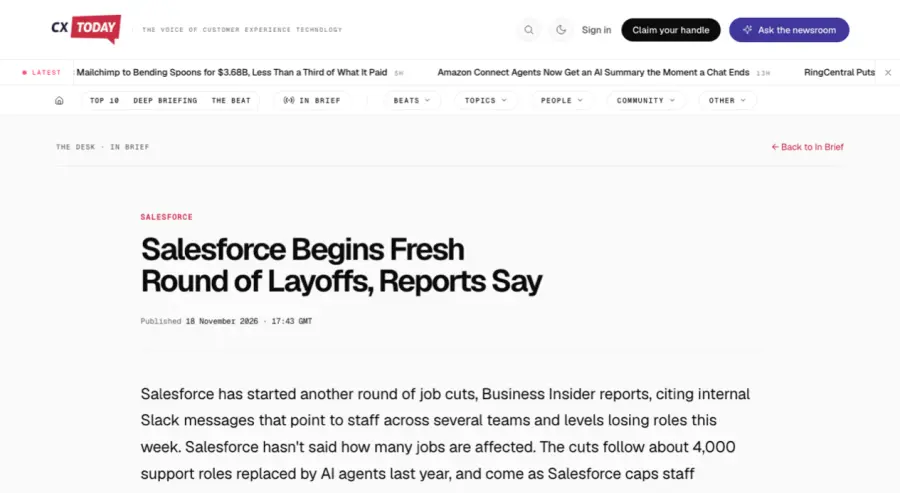
You’d check the fine print, so I did. The 4,000 roles that went to AI agents last year were support roles. No one has reported that a sales rep was swapped for a bot, and I won’t pretend otherwise to scare you.
Salesforce reports its quarterly results on 2 December. Black Friday is 5 days before that, on 27 November, and it’s the busiest week of the year for anyone who can sell inside an ad. That’s the date worth planning around.
Gainsight gave the small accounts to software first
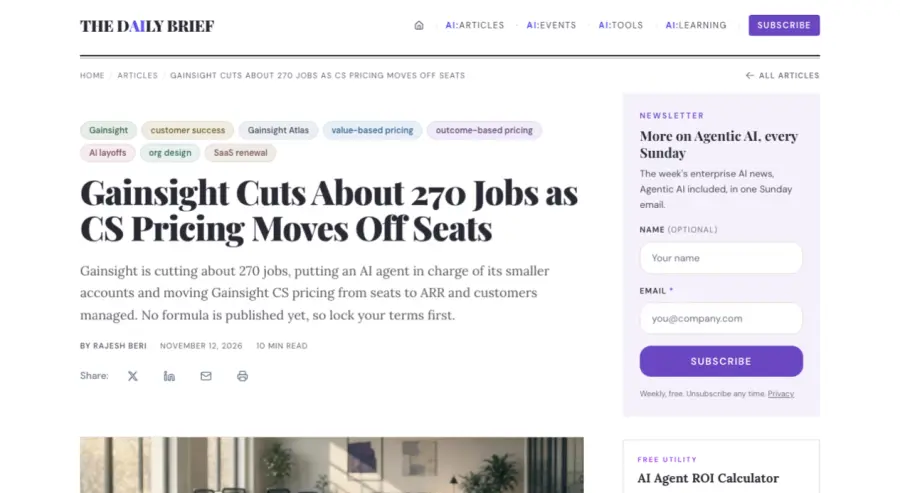
On 12 November, The Daily Brief reported that Gainsight, which makes customer success software, was cutting about 270 jobs and putting an AI agent in charge of its smaller accounts.
Small accounts are the training ground. You get handed the scrappy ones no senior rep wants, you fumble a few, and a couple of years later you can run a room. Take that rung out and the ladder still has a top. It’s just a lot further from the ground.
Good closers are answering this with one move, made in 2 parts:
- Move #1: Pitch a million buyers at once. The opener, the objection and the reason to act today go into ads, where brands are spending their money.
- Move #2: Build a pipeline that’s yours. Get proof and clients with your name on them, so your next deal doesn’t depend on someone else’s marketing team.
Do these 2 and the pipeline changes hands:
- your pitch reaches a million feeds at once, instead of one calendar slot
- the proof carries your name, where the company’s logo used to be
- the cold call starts running in reverse
Both moves come straight out of my programs, and more than 1,000 people have been through them.
First: why listen to me?
I’m Sean Ferres, for the record.
I’ve spent almost 9 years in direct response, and 7 of them helping copywriters, marketers and sales pros land clients. (One of my coaches, Ben, is a former hostage negotiator who now runs our sales calls. Our team meetings are very calm.)
I also run their ads in my own ad account, with my own money. So I get a front-row seat to which pitches close real buyers, and which ones die in the feed without a whimper.
So trust me on this one. The people brands want planning their ads right now are the ones who know why a buyer says yes.
Move #1: Pitch a million buyers instead of one
The psychology you already use on calls is the skill brands are short of in their ads.
The problem: the pipeline was always on loan
Every lead you’ve closed belonged to the company.
- marketing filled your calendar
- the company handed you the case studies
- you walked into every call with a logo wall behind you and the impressive numbers on slide 4
And loans get called in: US employers have now cited AI in 121,401 announced job cuts this year, 2.5 times the count at this point last year.
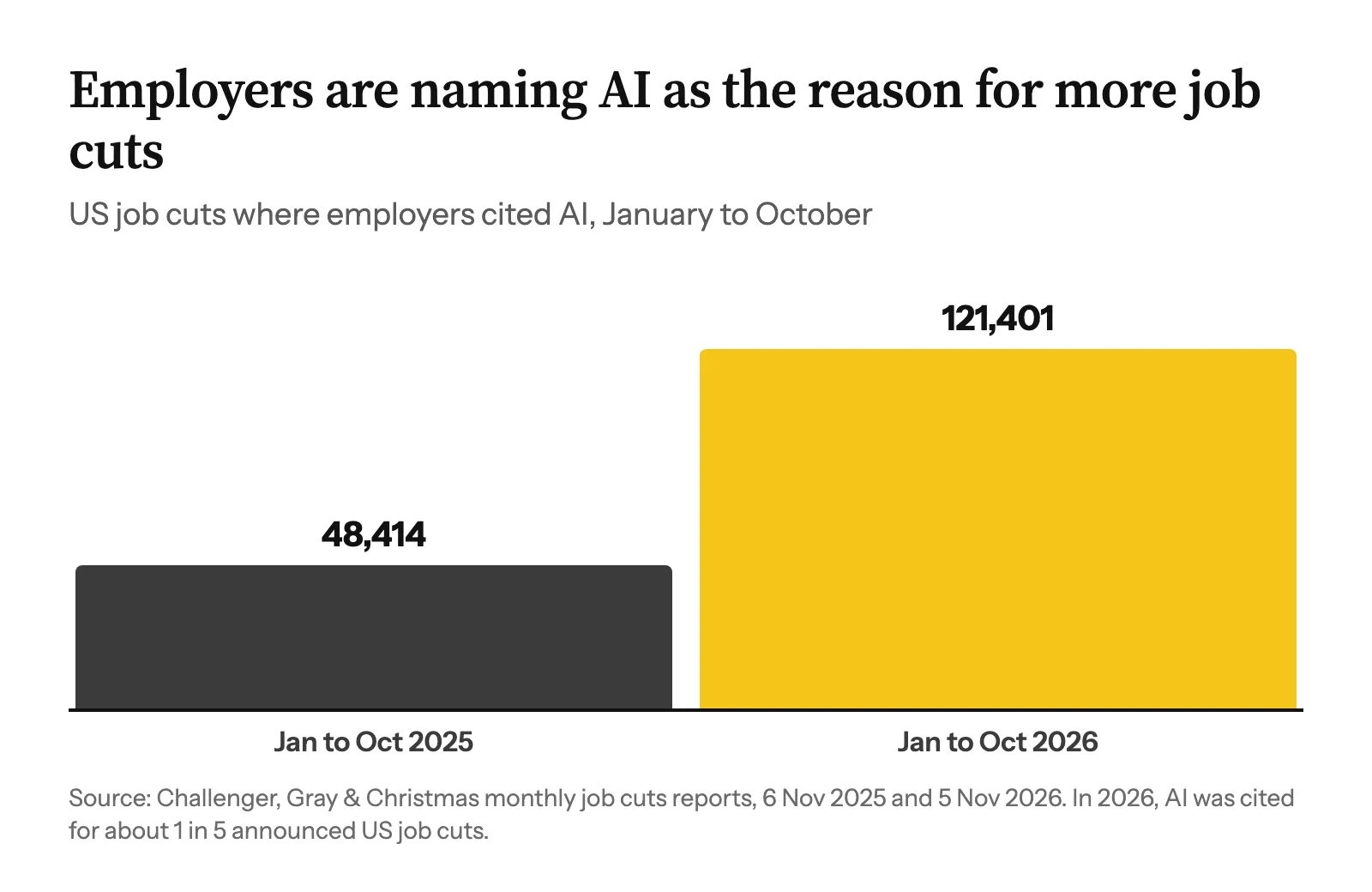
You did the hardest part. They kept the pipeline, the territory map and the comp plan someone redraws every January.
One member spent years in cybersecurity sales before he joined us. My team’s notes on him say it in a line: he knew how to speak and convert, he just didn’t have the lead gen. That gap is very learnable, and here’s how we close it.
An ad is your pitch, a million times over
A sales call is one pitch. An ad is that pitch to a million people, running while you’re at your kid’s footy game, or on the toilet scrolling someone else’s ads.
The psychology doesn’t change: the opener, the objection, the proof, the reason to act today. The machine did. On 28 October, Meta’s engineers described the newest version of Andromeda, the system that picks which ads get a chance to be shown.
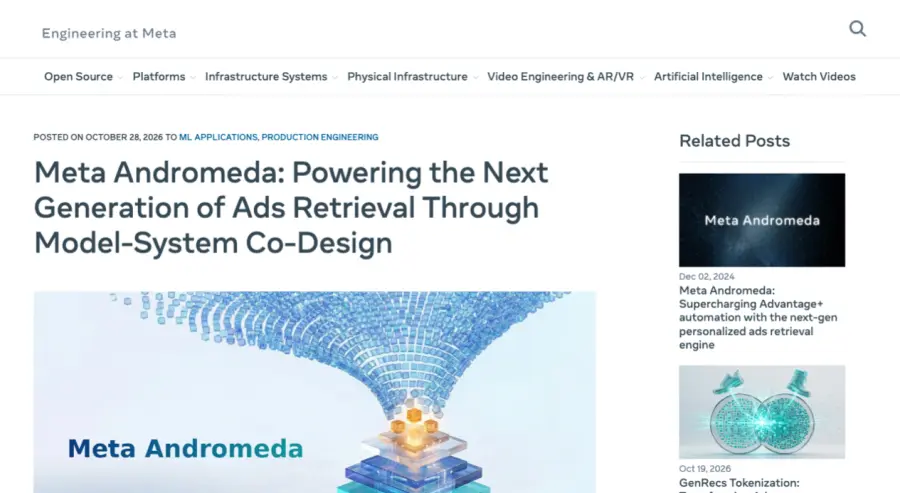
It reads the ad itself (the hook, the words, the picture) to decide who sees it. So one ad finds one kind of buyer, and in the accounts I work in, brands now run a lot more ads per product to reach the rest. They’re paying to run them, too.
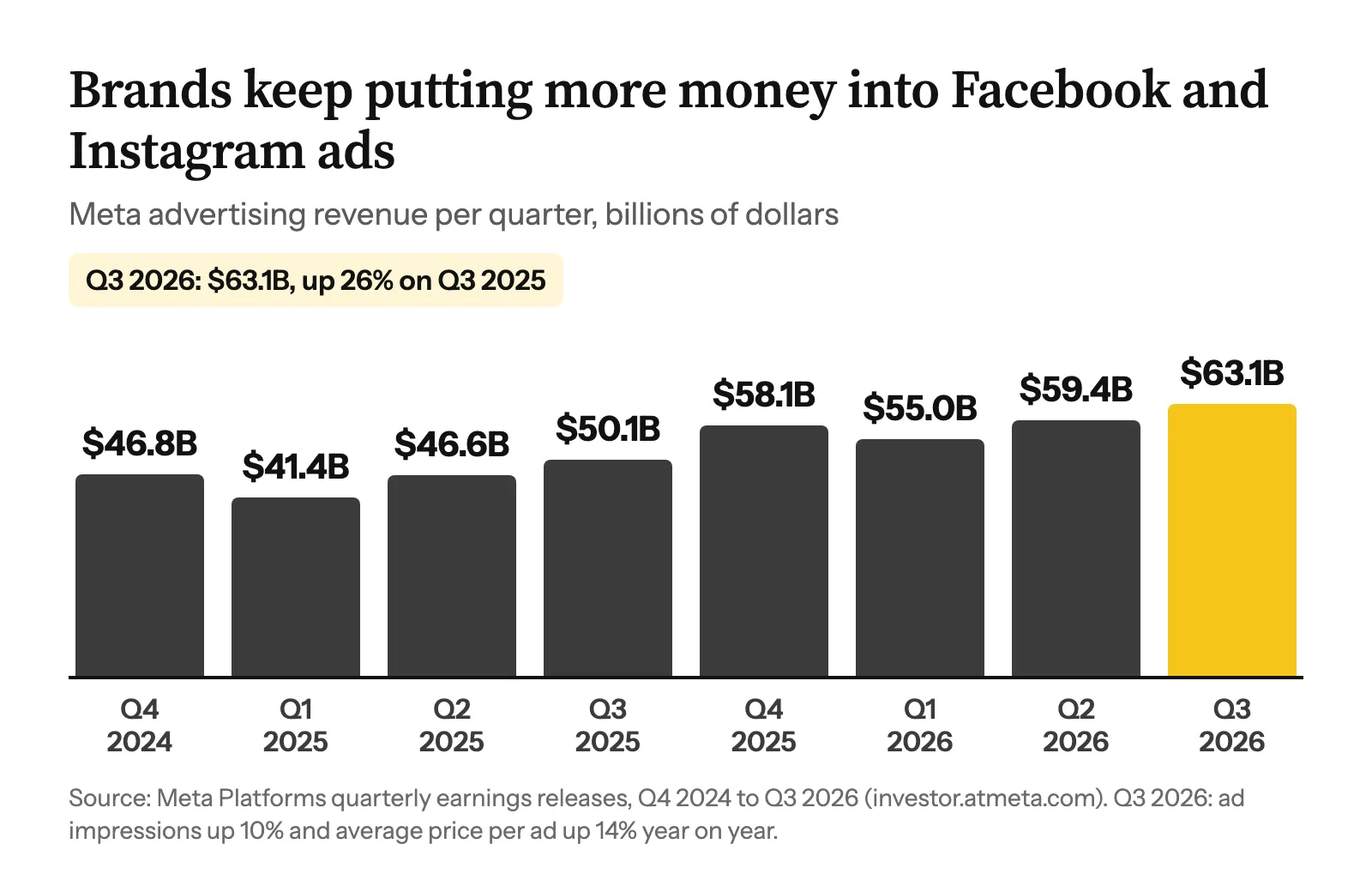
A lot of those ads get planned by people who know fonts, formats and trends, and have never watched a buyer’s face drop when the price comes out.
So you get ads that list features no one asked about, ignore the objection every buyer is already thinking, and end on “Shop now” like that counts as a close.
Strip the title off, and it’s your job
The planner’s title is creative strategist.
Working out who buys and why is a discovery call, minus the small talk about the weather. The hook is your opener, the first few seconds before they hang up (or scroll). And killing the ads that don’t sell is the Friday pipeline review: drop the pitch that’s dead, double down on the one that closes.

The part you probably haven’t done is make the ads themselves. These days, AI builds the statics and videos while you decide what they say. Yes, the same AI that got the small accounts. It turns out to be far better at making 50 pictures than at knowing why a buyer flinches. If you’re curious how we teach the research, angles and hooks, I walk through it in this breakdown.
Move #2: Build a pipeline with your name on it
On your own, the logo wall’s gone, so the proof has to be yours.
A founder asks one question, and it lands like an objection you’ve got no rebuttal for: “Soooo... what have your ads actually done?”
That cybersecurity sales member put the problem better than I can:
“How do you get proof without clients, when clients want proof?”
Step 1: Borrow my ad account
You make 3 ads for one of my live funnels, and I run them in my own ad account with up to $1,000 of my ad spend behind them.
Quick note before the screenshots on this page: they’re individual stories from people who did the work. Results vary and depend on effort, and they aren’t typical outcomes.
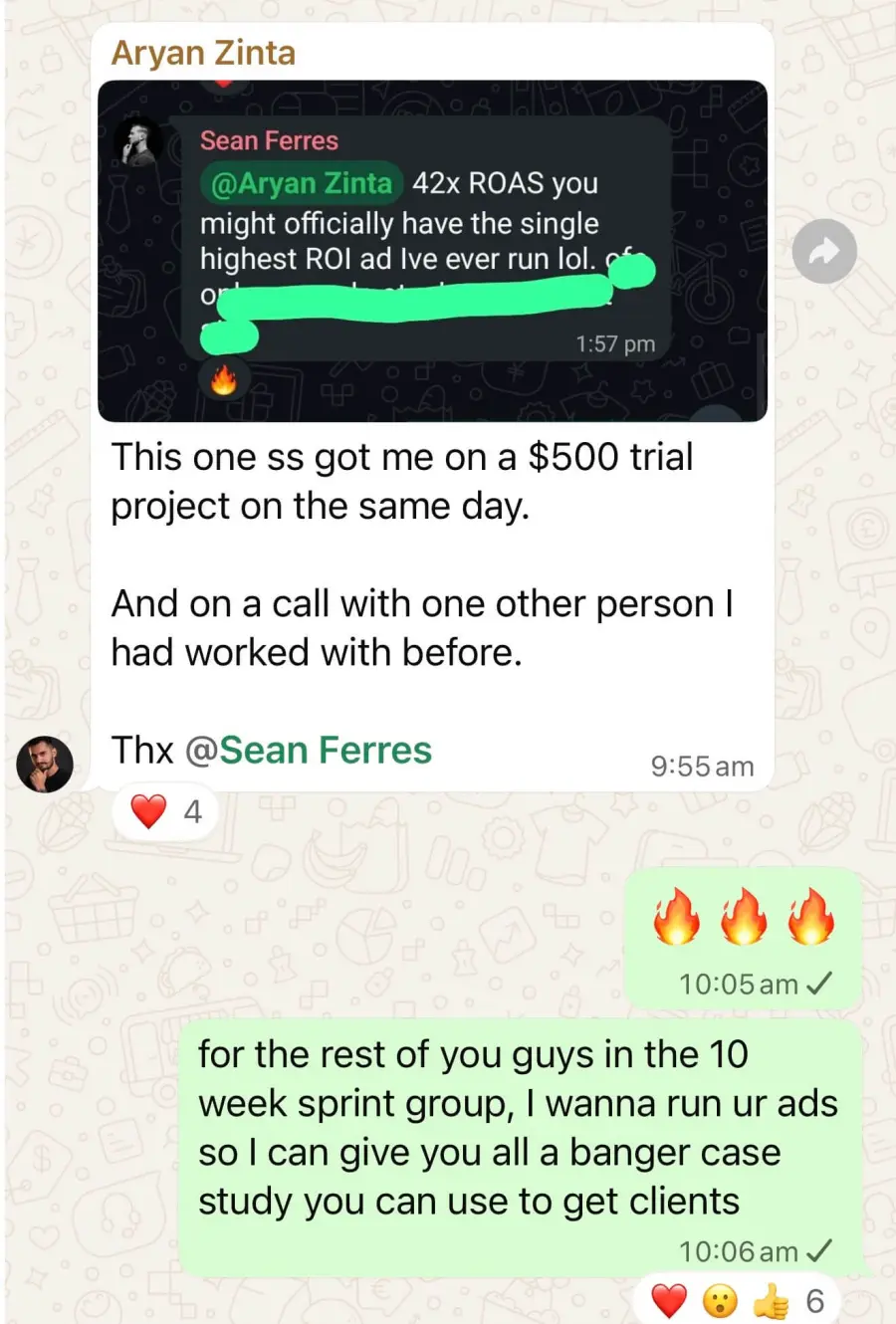
Aryan’s ad hit a 42x return on ad spend in my account. I sent him the screenshot, and he used it to land a paid trial the same day.
Black Friday is why the door’s open right now. Adobe expects $47.5 billion of online spending across Cyber Week, and brands rebuild their ads 3 times in about 90 days: Black Friday, the Christmas gift ads, then the January refresh.
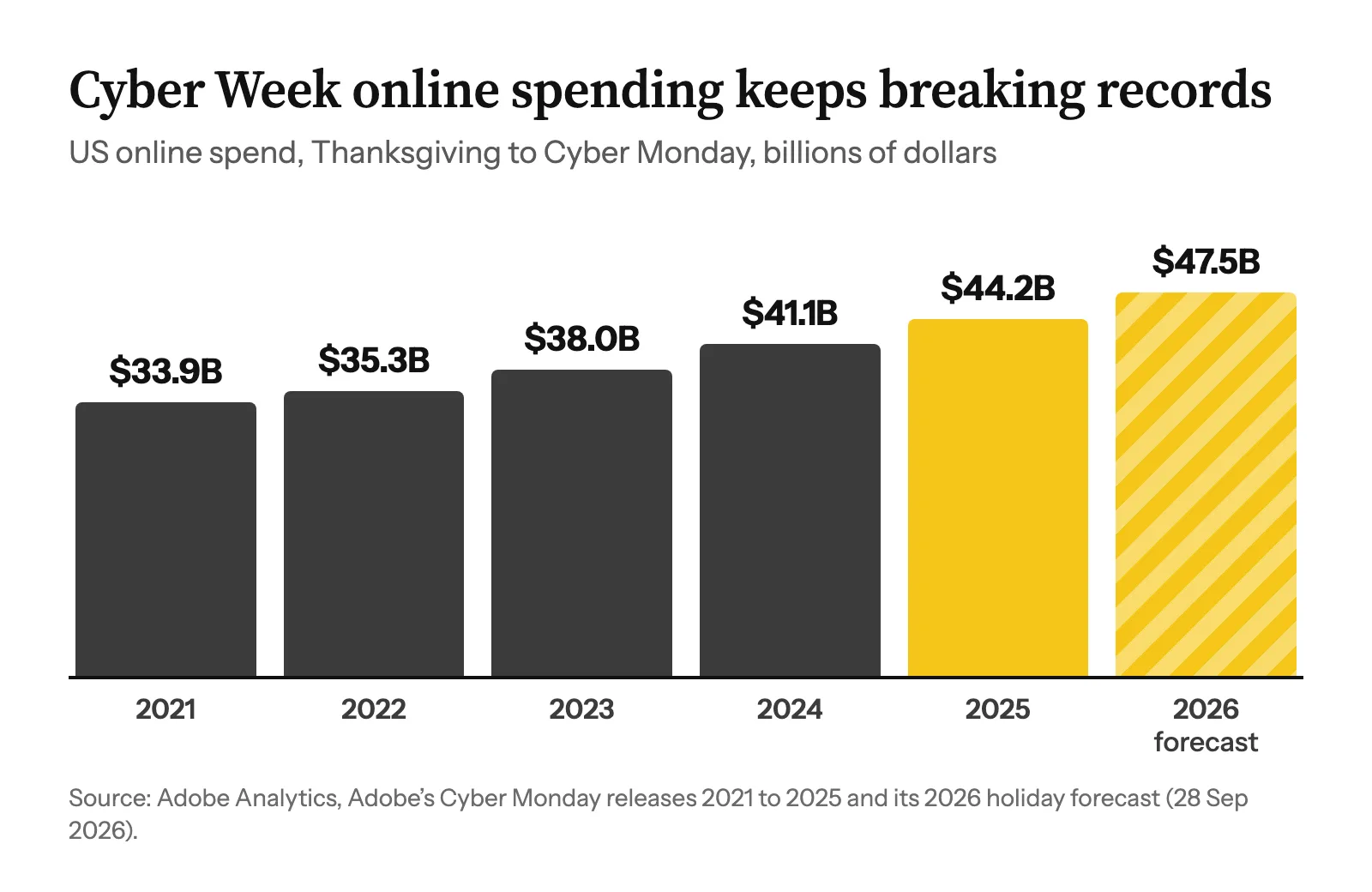
Every rebuild means more ads getting tested, and more chances for yours to be one of them.
Step 2: Let the cold call run in reverse
Maria didn’t have to say a word. A founder messaged her first: “So I see you’re a creative strategist 🙂”. Neil got so many messages after changing his LinkedIn bio that he changed it back.
Another member used to close calls for a coach on the side. He told my team he doesn’t have to educate brands at all, because they already know Meta’s Andromeda update is hurting their ads and they want someone who can fix it.
Alex was an SDR making 50 calls a day when his company fired the whole sales team on 25 January 2023. He signed his own first client on 1 February. (That’s a very fast start, and nowhere near typical.)
The plan was never 20 clients anyway. It’s one or 2 brands on a monthly retainer, a much smaller number than the one on your quota sheet. Here’s how the whole path works, start to finish.
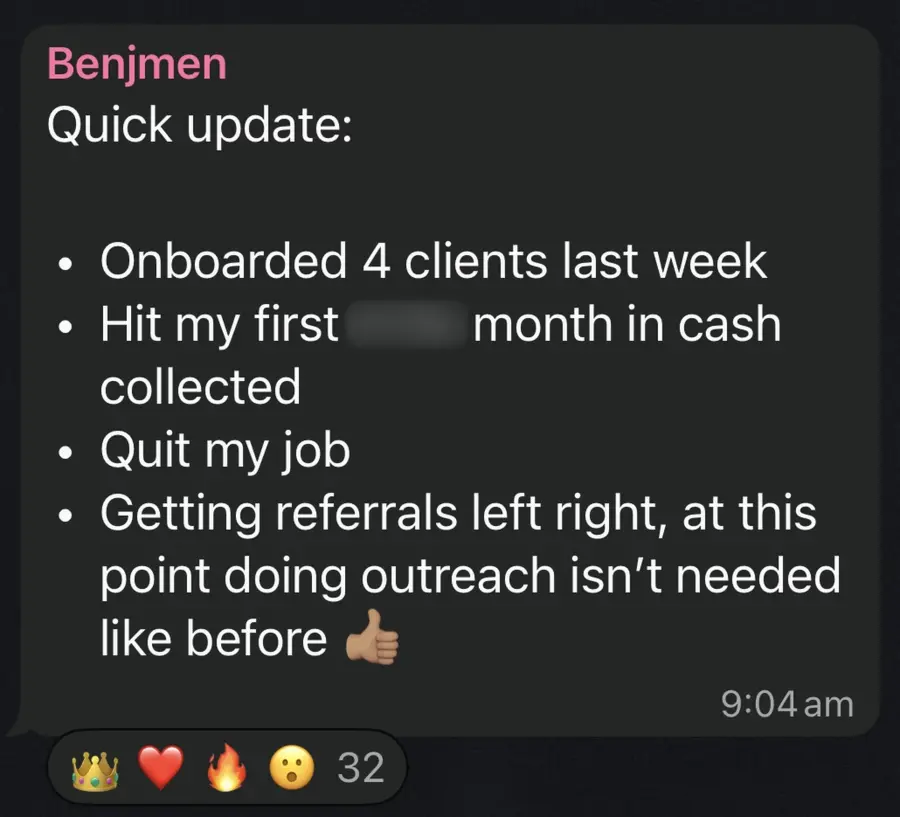
Benjmen got there in 4 bullet points.
The easy way to do all of this
Of course I’d love you to do this with me. But whether you work with me or not, if you sell for a living, before Black Friday you must:
- Put your pitch into ads, because that’s where brands are spending this quarter
- Get proof and clients that are yours, so your pipeline stops being on loan
Do those 2 and your next deal starts with a screenshot that has your name on it.
Do it yourself, or do it with us
You can piece it together from YouTube and trial and error. The Black Friday budgets won’t wait for you to finish the playlist.
Or take the shortcut. This Black Friday I’m running The Doorbusters, a 12-week case-study group inside The Creative Strategist Breakthrough. I’m doing it once, for Black Friday only, and 10 is the most I can take so everyone gets my eyes on their work.
Phase 1 is called “Get Useful Before Black Friday”, and it runs from now until 27 November. It’s where your research, angles and hooks get built, so your first ads are ready while brands spend hardest. Join after Black Friday and Phase 1 has already happened without you. There’s no second round.
My coaches and I teach you the research, the angles and the hooks, I run 3 of your ads in my own account, and Ben gives you the scripts for the client calls. Follow the steps, and if you haven’t hit the 12-week target (terms on the next page), my team keeps working with you for up to 9 more months at no extra cost.
→ See how closers turn one pitch into a million sales calls they never have to make
That’s all!
Sean
Get the next one
I write one of these when something in advertising changes and it matters for people who write, sell or market for a living. Get the next one by email.
One email when there is a new article. Unsubscribe any time. Privacy

Sean runs The Creative Strategist Breakthrough. He has spent almost 9 years in direct response and 7 of them helping copywriters land clients. 88 copywriters he has worked with have built six-figure incomes. More about Sean